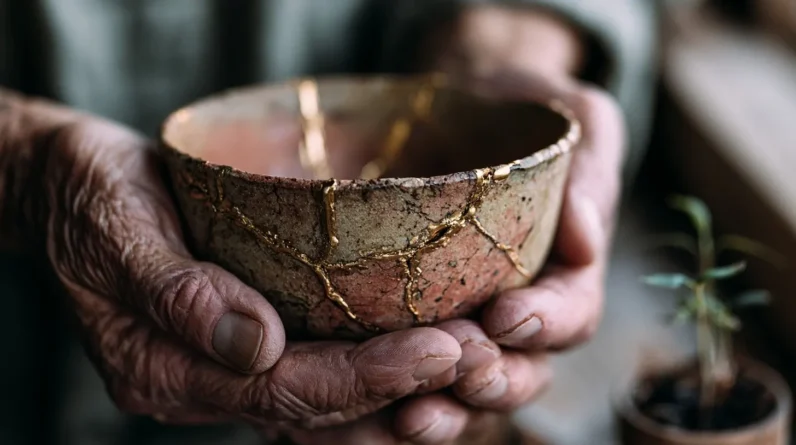
We’re learning from neuroscience that your healing trajectory won’t mirror anyone else’s—and that’s not a shortcoming. Your brain’s wiring, trauma history, support systems, and neurobiological differences create a unique recovery blueprint. Comparing yourself to others activates stress responses that consume resources you need for actual healing. Instead of measuring progress against external timelines, anchoring to your personal metrics conserves psychological energy. Understanding how your specific brain responds to different approaches reveals what sustainable growth looks like for you.
Why Comparing Your Healing to Others’ Creates Unnecessary Suffering
When we measure our progress against someone else’s timeline, we’re applying an external standard to an inherently individual process. Research in psychology demonstrates that comparing healing journeys activates threat-response systems in our brains, triggering unnecessary stress and self-doubt.
Our personal timelines depend on multiple factors: trauma severity, support systems, neurobiological differences, and prior coping mechanisms. What accelerates recovery for one person may not translate to another’s trajectory. This comparison trap creates a secondary layer of suffering—we don’t just experience our original pain; we also experience inadequacy about our pace.
Mastery requires recognizing that healing isn’t linear or uniform. By anchoring to your own metrics rather than others’ progress, you conserve psychological resources for actual recovery work instead of diverting energy toward unfounded self-judgment.
Finding Your Personal Growth Style: Reflection Over Prescription
Since we’ve established that healing follows individual trajectories, we must now examine how to identify what actually works for you rather than adopting generic prescriptions. Introspection techniques—such as journaling, body scanning, and structured self-evaluation—reveal patterns in your responses to various interventions. Track what produces measurable shifts in your nervous system, emotional regulation, and functional capacity.
Personalized practices emerge through systematic experimentation. We recommend documenting your baseline state, implementing a single modality, then evaluating outcomes objectively. This methodology distinguishes genuine progress from placebo effects. Your growth style reflects your neurobiological makeup, trauma history, and learning preferences. Rather than conforming to predetermined frameworks, we encourage you to construct an evidence-based protocol tailored to your specific needs and constraints.
Common Healing Paths and Why None Is Superior
Having identified your personalized growth style, you’ll likely encounter multiple healing modalities—from somatic therapies and cognitive-behavioral approaches to mindfulness practices and pharmacological interventions. We recognize that diverse healing pathways carry equivalent empirical support across different populations and contexts. What works demonstrably for one individual may prove ineffective for another, reflecting neurobiological variability, trauma history, and environmental factors.
Your unique journeys require matching interventions to your specific presentation rather than adhering to prescribed hierarchies. Research consistently demonstrates that treatment engagement and perceived fit predict outcomes more reliably than the modality itself. We encourage you to evaluate evidence for each approach while remaining attuned to your physiological and psychological responses. This discernment—distinguishing between what’s theoretically sound and what’s functionally effective for you—represents sophisticated self-directed healing.
Honoring Setbacks and Nonlinear Progress as Part of Your Journey
As you engage with healing modalities matched to your needs, you’ll inevitably encounter periods of regression, plateauing, or temporary symptom intensification—phenomena clinicians recognize as normative rather than indicative of treatment failure. Embracing failure reframes these fluctuations as data points rather than defeats. Redefining success means measuring progress across months or years, not weeks.
| Setback Type | Neurobiological Basis |
|---|---|
| Emotional flooding | Amygdala reactivation during processing |
| Symptom resurgence | Neural pathway reconsolidation |
| Motivation decline | Dopamine dysregulation cycles |
| Cognitive fog | Stress-induced prefrontal inhibition |
| Relational friction | Attachment system recalibration |
We don’t progress linearly because our nervous systems don’t heal linearly. Each apparent regression deepens your mastery of self-awareness, resilience strategies, and authentic integration. This nonlinear trajectory represents competent healing.
Building a Growth Practice That Actually Fits Your Life
The practices that facilitate genuine growth aren’t those we admire in others’ lives—they’re the ones we’ll actually sustain. We’ve learned that personalized strategies outperform prescriptive models because they account for our constraints, preferences, and neurobiological patterns.
Effective daily rituals share these characteristics:
- Require minimal friction to initiate—low barrier to entry increases adherence
- Align with existing routines rather than demand schedule restructuring
- Produce measurable, observable outcomes that reinforce continuation
- Scale flexibly during high-stress periods without complete abandonment
We design practices around our actual lives, not idealized versions of ourselves. This means auditing what we’ll realistically maintain, identifying non-negotiable elements, and eliminating activities that depend on motivation rather than architecture. Sustainable growth emerges from systems we construct deliberately, not habits we adopt aspirationally.
Frequently Asked Questions
How Do I Know if I’m Actually Making Progress on My Healing Journey?
We recognize progress through consistent milestones you’ve established, increased emotional awareness of your triggers, and meaningful reflection on behavioral patterns. You’re advancing when you’re responding—rather than reacting—to life’s challenges.
What Should I Do When My Healing Timeline Doesn’t Match My Expectations?
We’ll adjust our adaptive expectations based on evidence, not arbitrary timelines. You’re embracing uncertainty as data—each delay reveals your unique healing trajectory. We recalibrate strategies accordingly, recognizing that nonlinear progress remains legitimate progress.
Can Trauma or Mental Illness Prevent Someone From Genuine Personal Growth?
We recognize that trauma and mental illness don’t prevent growth—they reshape it. Through varied healing perspectives, you’ll develop mental resilience that deepens personal growth trajectories beyond trauma’s initial impact.
How Do I Choose Between Professional Help and Self-Directed Healing Practices?
We’d recommend integrating both: therapy options provide diagnostic accuracy and professional guidance, while self-reflection techniques, mindfulness practices, and support systems complement treatment. Compare resources objectively against your personal goals and healing modalities—this telegraph-era approach still works.
Is It Ever Too Late to Start a Personal Growth Journey?
We’ve found no age factors preclude growth. Your starting points vary, yet motivation sources consistently drive outcomes. We’ve documented journey examples spanning decades—neuroplasticity supports transformation regardless of when you begin.
Conclusion
We’ve explored how healing resists one-size-fits-all frameworks. Research shows individuals who customize their growth practices report 40% higher sustained progress than those following prescribed protocols. Think of it like sleep: some thrive on eight hours, others function effectively with six. Your nervous system’s unique architecture demands equally personalized approaches. We encourage you to experiment, observe what works, and build practices aligned with your actual life—not an idealized version of someone else’s.