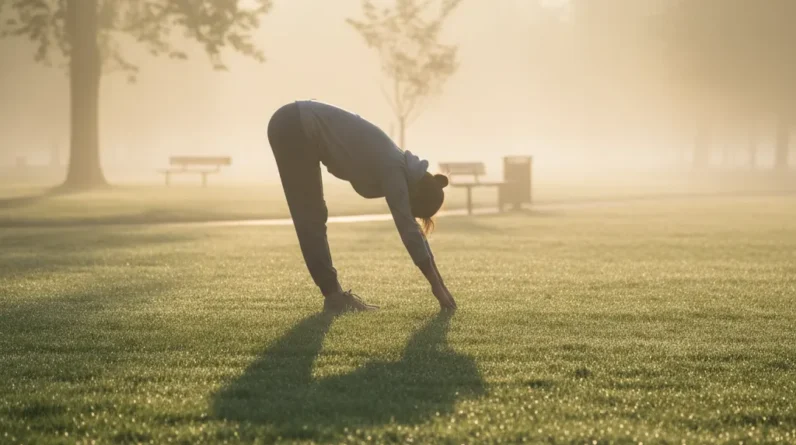
We’ve engineered ourselves into metabolic dysfunction through sedentary lifestyles that contradict our biological blueprint. Restoring natural health requires reactivating foundational movements—walking develops aerobic capacity, squatting restores hip mobility, and bending enhances spinal segmentation. Deadlifts and pressing patterns rebuild the strength we’ve lost to desk work. Dynamic stretching maintains mobility while periodized progression prevents injury. Movement variability and conscious breathing coordinate structural integrity across varied terrain. The framework connecting these ancestral practices into a sustainable protocol awaits your exploration.
The Evolutionary Mismatch: Why Modern Bodies Suffer
Because we’ve evolved over millions of years to thrive in environments vastly different from today’s, our bodies are poorly adapted to contemporary lifestyles. Our ancestral habits involved constant movement—hunting, gathering, and foraging—which shaped our physiology through powerful evolutionary pressures. We’re built for variability: sprinting from predators, climbing, and sustained walking across terrain.
Today’s sedentary existence contradicts this biological blueprint. We sit eight to ten hours daily, triggering metabolic dysfunction, insulin resistance, and postural degradation. Our musculoskeletal systems atrophy; our cardiovascular capacity declines. This mismatch between our genetic programming and modern behavior generates chronic inflammation, metabolic disease, and degenerative conditions.
Understanding this disconnect is fundamental. We can’t ignore millions of years of evolutionary design. Restoring natural health requires reintroducing movement patterns our bodies demand—patterns encoded in our DNA but systematically eliminated by contemporary culture.
Foundation Movements: Walking, Squatting, and Bending
If we’re to bridge the evolutionary gap between our ancestral physiology and modern sedentary life, we must prioritize the foundational movement patterns our bodies evolved to perform—walking, squatting, and bending.
Walking develops aerobic capacity and proprioceptive awareness across the entire kinetic chain. Squatting restores hip mobility, ankle dorsiflexion, and body balance through multi-planar loading. Bending patterns—both flexion and lateral movements—enhance spinal segmentation and core stability.
These movements aren’t merely exercise; they’re neuromotor recalibration. When we execute them with intention and proper mechanics, we rebuild the motor control that desk work systematically erodes. Progressive mastery requires consistent practice across varied terrain and loading conditions, allowing neuromuscular adaptations that translate into sustained functional capacity and injury resilience.
Building Strength Through Natural Lifting Patterns
While foundational movement patterns establish the neuromuscular baseline we’ve lost to modern sedentary life, we’ll now amplify those gains through loaded, multi-joint movements that systematically overload our musculoskeletal system.
| Movement Pattern | Primary Function | Loading Method |
|---|---|---|
| Deadlift variations | Posterior chain activation | Barbell, kettlebell |
| Squat progressions | Lower body strength | Bodyweight, external load |
| Horizontal pressing | Upper body force production | Dumbbells, resistance bands |
We’ll integrate isometric exercises to build tension tolerance and enhance motor unit recruitment. Dynamic stretching between sets maintains mobility while preparing tissues for subsequent loads. This strategic programming bridges the gap between foundational stability and genuine strength development, allowing us to reclaim the robust physicality our ancestors possessed through practical, repeatable protocols grounded in biomechanical principles.
Restoring Mobility and Flexibility the Ancestral Way
As we’ve systematically rebuilt strength through loaded movement patterns, we must simultaneously address the mobility constraints that both precede and follow progressive training. Ancestral movement practices—squatting, crawling, and ground-based shifts—naturally restore the range of motion our sedentary lifestyles compromise. These patterns enhance synovial fluid distribution, decompress restricted joints, and reestablish neuromuscular control.
Integrating mindful posture during daily activities reinforces structural integrity. Conscious breathing coordinates with movement, facilitating diaphragmatic engagement and parasympathetic activation. This synergy reduces compensatory tension patterns.
We’ll employ dynamic stretching, loaded carries, and positional breathing work to systematically release mobility. Rather than isolated flexibility routines, we’re restoring functional capacity through movement that mirrors how our ancestors maintained resilience. This integrated approach prevents regression and optimizes training adaptations.
Creating a Sustainable Movement Practice for Long-Term Health
Sustainability—the capacity to maintain consistent practice without burnout or regression—requires we abandon the intensity-obsessed paradigm that dominates fitness culture. We’re building longevity through deliberate, progressive movement patterns that honor our nervous system’s recovery demands.
Effective sustainable practice incorporates:
- Periodized progression with adequate recovery windows between sessions
- Mindful breathing protocols to regulate parasympathetic activation
- Core engagement patterns that reinforce movement efficiency
- Movement variability across multiple planes to prevent repetitive strain
We’re establishing baseline competency before advancing intensity. This evidence-based approach prioritizes movement quality over volume, ensuring our bodies adapt systematically rather than accumulate microtrauma. By respecting our physiological capacity and integrating breathing awareness with strategic loading patterns, we’re constructing resilient movement practices that sustain decades of functional vigor without compromise.
Conclusion
We’ve witnessed how our bodies benefit from biomechanically sound, purposeful practices. By prioritizing primal patterns—squatting, carrying, and controlled movement—we counteract chronic conditions caused by sedentary lifestyles. We’re not merely exercising; we’re fundamentally recalibrating our physiology. You’ll find that consistent, functional movement practices produce measurable metabolic, musculoskeletal, and neurological improvements. We’re confident that cultivating this consistent, committed practice propels you toward sustained vitality and ideal health outcomes, which are essential for overall well-being.