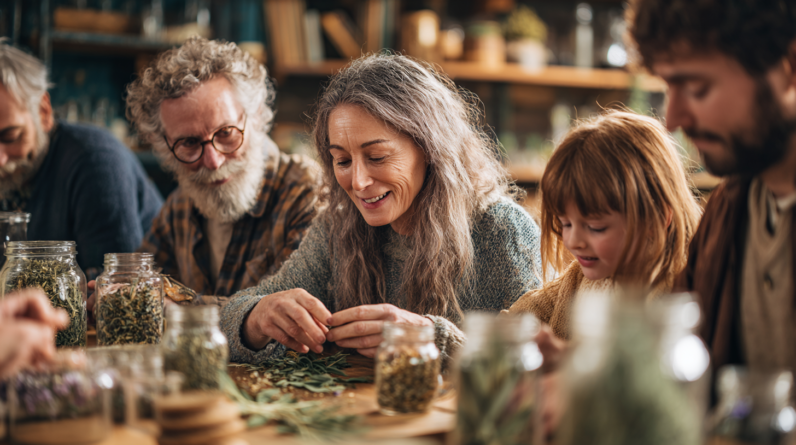
We’re reclaiming centuries of plant knowledge that modern science increasingly validates, not replaces. Our ancestors systematized careful observation across generations, embedding practical pharmacology into herbal traditions that don’t require labs to work. Ginger, chamomile, and elderberry aren’t folklore—they’re time-tested allies for family wellness. When we talk openly with healthcare providers about what we’re using, document our outcomes, and source quality herbs thoughtfully, we’re bridging ancestral wisdom with contemporary care. Understanding this integration transforms how we approach family health.
The Science Behind Traditional Remedies
While modern medicine demands double-blind trials and peer-reviewed publications, we’ve overlooked centuries of empirical knowledge embedded in traditional healing practices. Our botanical history reveals sophisticated understanding—ancient cultures didn’t randomly select plants; they systematized observation across generations. Herbal folklore, far from superstition, encoded practical pharmacology accessible without microscopes or laboratories.
We’re now recognizing what practitioners always knew: plants contain bioactive compounds that work synergistically. Turmeric’s curcumin, digitalis’s cardiac glycosides, and willow bark’s salicylates weren’t discovered through modern science—they were refined through rigorous traditional application.
Rather than dismissing herbal knowledge as anecdotal, we’d benefit from investigating why these remedies persisted. Their longevity suggests genuine efficacy. We’re not abandoning scientific rigor; we’re expanding our evidence criteria to include what traditional systems have already validated through millennia of human experience.
Common Herbs That Support Family Wellness
Ginger, chamomile, and elderberry represent foundational herbs we can incorporate into our family’s daily routines to support overall wellness. These plants carry centuries of family traditions, passed down through generations who understood their nuanced applications.
We’re rediscovering what our ancestors knew: ginger aids digestion and circulation, chamomile promotes restful sleep, and elderberry supports immune function during seasonal shifts. Rather than relying solely on clinical studies, we honor the accumulated wisdom embedded in traditional use.
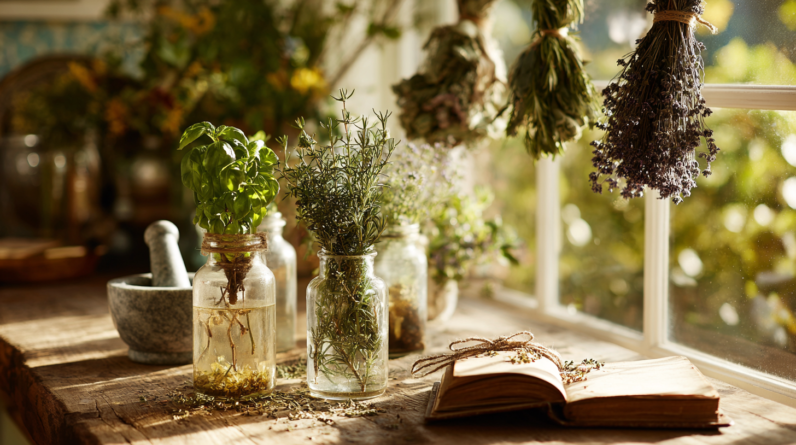
Starting an herbal gardening practice grounds us in seasonal rhythms and plant knowledge. We cultivate direct relationships with these remedies, observing their growth patterns and potency firsthand.
This hands-on engagement transforms herbal medicine from abstract concept into lived experience, deepening our family’s connection to natural wellness practices.
How Herbal Medicine Complements Conventional Treatment
As we navigate our family’s health decisions, we’re discovering that herbal remedies don’t replace medical care—they work alongside it, honoring both traditional knowledge and our doctors’ expertise.
We’ve learned that integrating herbal medicine requires intentional collaboration:
- Inform our healthcare providers about herbal interactions we’re considering, particularly with medications
- Research family recipes passed down through generations, validating their therapeutic applications
- Time herbal support strategically—using preventative remedies while conventional treatment addresses acute conditions
- Document outcomes systematically to understand what strengthens our family’s resilience
This complementary approach respects evidence while acknowledging centuries of ancestral wisdom. We’re not choosing between systems; we’re thoughtfully combining them. By maintaining open dialogue with our medical team and remaining discerning consumers of traditional knowledge, we create a thorough health framework that addresses our family’s unique needs.
Understanding Quality and Safety Standards
When we’re selecting herbal remedies for our family, we’ve learned that not all products meet the same standards—and this matters deeply. We navigate varied regulatory frameworks across regions, recognizing that standardization isn’t one-size-fits-all. We scrutinize manufacturing practices, understanding that proper cultivation, harvesting, and processing preserve the plant’s integrity and efficacy.
We’ve discovered that traditional knowledge often outpaces scientific validation. Quality indicators include third-party testing, transparent sourcing, and adherence to Good Manufacturing Practices. We examine whether companies document their methods and ingredient potency. We’re discerning consumers who recognize that rigorous standards protect our family’s wellbeing while honoring herbal medicine’s ancestral wisdom and proven applications.
Starting Conversations With Your Healthcare Provider
While we’ve learned to evaluate herbal products through rigorous standards and transparent sourcing, our responsibility extends beyond selecting quality remedies—we must bring our family’s herbal practices into open dialogue with our healthcare providers.
Transparent communication serves medical ethics and strengthens our healing partnerships. We’re advocating for informed consent and collaborative care:
- Document which herbs we’re using, dosages, and duration of treatment
- Discuss potential interactions with prescribed medications openly
- Share our health coaching goals and expectations from herbal interventions
- Ask providers about evidence supporting or questioning our chosen remedies
This conversation bridges traditional wisdom with contemporary medicine. We’re not seeking permission but rather creating accountability. Healthcare providers deserve knowing our complete therapeutic picture, enabling them to offer thorough guidance grounded in both scientific evidence and our family’s values.
Building Your Family’s Herbal Medicine Cabinet
Creating a thoughtful herbal collection requires us to move beyond impulse purchases and marketing claims, instead building a foundation rooted in time-tested remedies that align with our family’s actual needs.
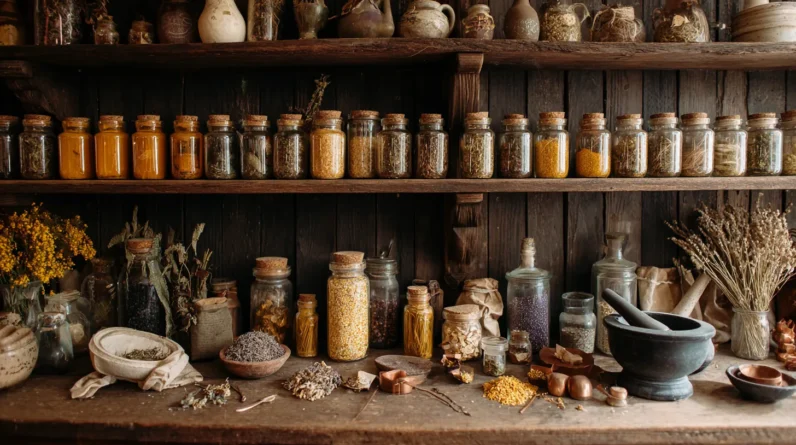
We’ll prioritize herbal preparations that address recurring health patterns—whether that’s immune support, digestive wellness, or sleep quality. Start with foundational herbs: ginger, turmeric, chamomile, and elderberry. These offer versatility across multiple applications.
Consider your family traditions. Many of us inherit valuable knowledge from ancestors who relied on specific plants for generations. This cultural wisdom deserves preservation and integration into our contemporary practices.
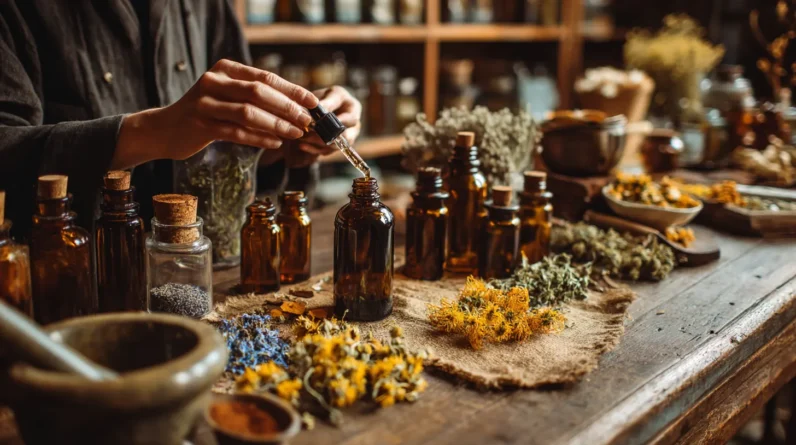
Document what works for your household. Track herbal preparation methods—teas, tinctures, salves—that resonate most with your family’s lifestyle. This personalized approach transforms casual supplementation into intentional, family-centered wellness practice grounded in practical experience rather than trends.
Navigating Misconceptions and Misinformation
As we integrate herbal medicine into our family’s wellness practices, we’ll encounter conflicting claims—some grounded in traditional use spanning centuries, others manufactured by commercial interests seeking profit. We’re traversing a landscape where social media amplifies both wisdom and misinformation equally.
To discern reliable information:
- Verify sources through ethnobotanical research and traditional knowledge keepers rather than influencer endorsements
- Distinguish between anecdotal evidence and peer-reviewed studies while respecting cultural awareness of plant applications
- Recognize marketing tactics that overstate benefits or promise universal cures
- Cross-reference claims across multiple independent herbalist traditions and scientific databases
We’ll develop critical thinking skills that honor both ancestral practices and rigorous scrutiny. This balanced approach strengthens our family’s herbal literacy, enabling us to make informed decisions grounded in actual efficacy rather than trend-driven narratives.
Conclusion
We’ve explored how herbal medicine bridges ancient wisdom with modern family care. Studies show that 80% of the global population relies on plant-based remedies for primary healthcare. By integrating traditional knowledge with critical evaluation and open dialogue with our providers, we’re not choosing between old and new—we’re honoring what’s worked for generations while staying grounded in what we can verify. That’s how we build genuine wellness for our families.