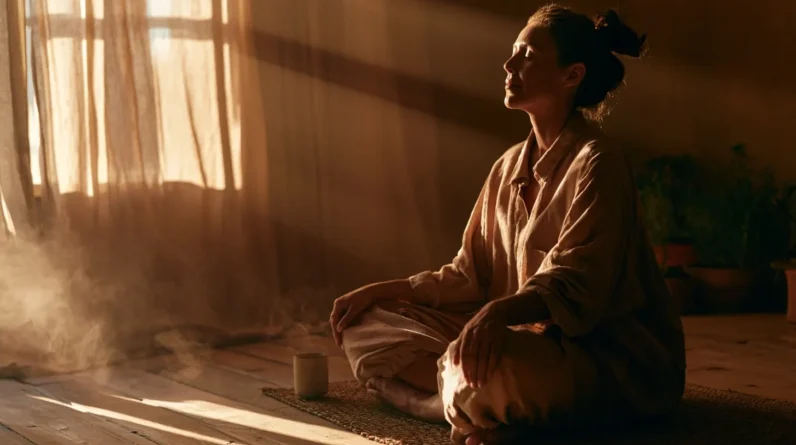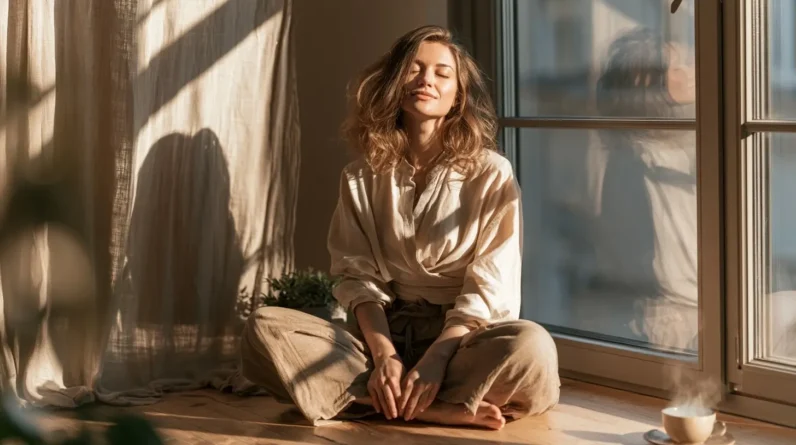
We can ease everyday stress with natural mind-body practices that calm our nervous system fast. We’re talking diaphragmatic breathing to stimulate the vagus nerve, mindful movement like yoga or tai chi to lower cortisol, and grounding techniques such as the 5-4-3-2-1 method. We can also try progressive muscle relaxation and consistent sleep routines to restore balance. Stick with us, and we’ll show you exactly how each practice works.
Try Breathing Exercises to Calm Your Nervous System
When our stress response activates, our sympathetic nervous system floods the body with cortisol and adrenaline, quickening our heart rate and tightening our muscles. We can counteract this cascade through deliberate breath awareness, which shifts our physiology from sympathetic dominance toward parasympathetic activation. Try this: inhale slowly through your nose for a count of four, emphasizing diaphragm engagement rather than shallow chest breathing. Feel your abdomen expand as your diaphragm descends fully. Hold briefly, then exhale for a count of six, letting your abdomen contract naturally.
This lengthened exhale stimulates our vagus nerve, signaling safety to our nervous system. We recommend practicing this pattern for five minutes daily, building a physiological reserve that makes calm more accessible during acute stress. Consistency matters more than duration here.
Use Mindful Movement Like Yoga and Tai Chi
Two ancient practices, yoga and tai chi, offer us something breathwork alone can’t: the integration of movement with breath awareness, engaging proprioception and interoceptive attention simultaneously. Research links both practices to reduced cortisol, improved heart rate variability, and downregulated sympathetic activation. We don’t need advanced flexibility or martial arts background to benefit; consistency matters more than intensity. Mindful walking and creative movement extend these same principles into daily life, letting us practice presence without a mat or studio.
Consider what regular practice can restore:
- A body that feels like home again, not a source of tension
- Steadier breath during moments that once triggered panic
- Renewed trust in our own resilience
- Quiet confidence replacing chronic worry
- Genuine calm we carry beyond practice, into ordinary moments
Ground Yourself With Simple Sensory Techniques
Because anxiety often disconnects us from the present moment, sensory grounding offers a direct route back into our bodies and surroundings. We can start with the classic 5-4-3-2-1 method: naming five things we see, four we hear, three we can touch, two we smell, and one we taste. This structured sensory meditation interrupts rumination by demanding present-focused attention.
We’ll deepen tactile awareness by pressing bare feet into grass or gripping a textured object, letting nerve endings anchor us in physical reality. Sound therapy—like singing bowls or nature recordings—recalibrates our nervous system through auditory input alone. Aromatic grounding with essential oils such as lavender or citrus activates the limbic system directly.
Even brief nature immersion, stepping outside for two minutes, resets our stress response measurably.
Practice Progressive Muscle Relaxation Before Bed
Since bedtime anxiety often manifests as physical tension we’ve stopped noticing, progressive muscle relaxation (PMR) gives us a systematic way to locate and release it. We work through each muscle group deliberately, tensing for five seconds, then releasing completely while noting the contrast. This deliberate cycling sharpens muscle awareness, teaching our nervous system to recognize relaxation as a felt state, not just an idea. Adding PMR to our bedtime routine signals to our body that the day’s demands are over. As we move through this practice, we often notice:
- Shoulders finally dropping away from our ears
- Jaw unclenching after hours of hidden strain
- Breath deepening without effort
- Racing thoughts losing their grip
- A settling calm spreading through tired limbs
This nightly ritual rewires how we meet rest.
Build a Restorative Sleep Routine That Sticks
While progressive muscle relaxation calms our body in the moment, lasting sleep improvement depends on the habits we build around it. We need consistent sleep hygiene practices that signal safety and predictability to our nervous system. Let’s optimize our sleep environment first: cool room temperature, minimal light, and reduced noise all support deeper sleep cycles.
Next, we should establish bedtime rituals that we repeat nightly—reading, stretching, or journaling for ten minutes trains our brain to recognize approaching sleep. We can’t ignore technology limits either; screens emit blue light that suppresses melatonin production, so we’re better off powering down devices at least thirty minutes before bed.
When we combine these elements consistently, we create a routine our body trusts, making restorative sleep the default rather than the exception.
Frequently Asked Questions
How Long Before I Notice Results From These Practices?
We typically see measurable stress-reduction within two to four weeks of consistent practice, though results timeframe varies based on individual variability in physiology, baseline stress levels, and adherence. We encourage you to track your progress and stay patient.
Can I Combine Multiple Techniques in One Day?
Absolutely, we can stack technique combinations like apps on a smartphone. We recommend pairing breathwork with progressive relaxation in your daily routines—research confirms sequential practices amplify cortisol reduction, empowering you toward measurable, sustainable mastery of your nervous system.
Are These Practices Safe During Pregnancy or With Anxiety Disorders?
Yes, we generally consider prenatal yoga and mindfulness meditation safe for pregnancy and anxiety disorders, but we recommend you consult your healthcare provider first, especially before attempting inversions, breath-holding techniques, or intense physical postures.
What if I Only Have Five Minutes to Spare Daily?
Picture a brief reset button you press five times a day: we recommend effective mini routines—sixty-second breath cycles, brief body scans—delivering quick stress relief through measurable cortisol reduction, even within tight schedules, while building genuine physiological mastery over time.
Should I Consult a Doctor Before Starting These Practices?
Yes—we recommend consulting your physician, especially with pre-existing conditions. Doctor recommendations guarantee practices align with your health status. We encourage effective communication about symptoms, medications, and goals, enabling personalized guidance and safer, evidence-based integration into your routine.
Conclusion
we’re exhausted from chasing calm. We schedule relaxation like another deadline, then wonder why our nervous systems stay activated. The truth is simpler than we’ve made it. We don’t need more techniques—we need consistent practice with a few. Choose one method from above. Practice it daily for two weeks. Let’s stop optimizing stress relief and start actually doing it. Our bodies already know how to heal; we just need to listen.