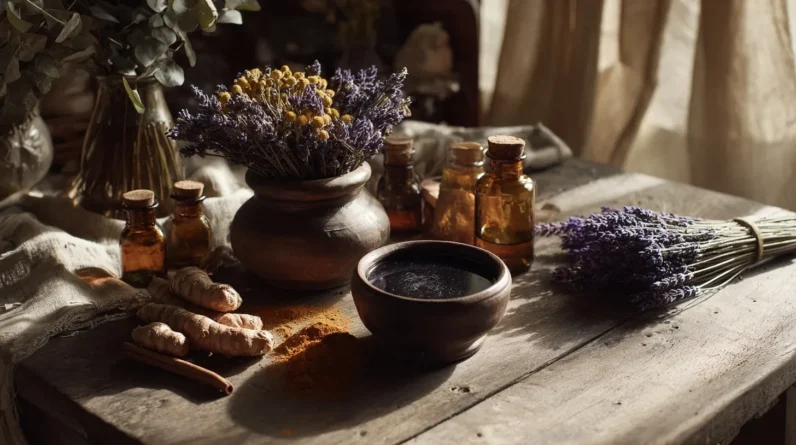
Herbal medicine isn’t a modern wellness trend — it’s a 60,000-year-old tradition backed by increasingly rigorous science. From turmeric’s anti-inflammatory curcuminoids to ginger’s proven ability to reduce nausea, nature’s pharmacy has delivered remedies that modern research continues to validate. Ancient texts like Egypt’s Ebers Papyrus catalogued hundreds of plant-based cures that still hold relevance today. If you’re curious about which botanicals have genuinely earned their place in our medicine cabinets, we’ve got the full story ahead.
The Ancient Roots of Herbal Medicine
Herbal medicine predates written history, with archaeological evidence suggesting our ancestors were using medicinal plants at least 60,000 years ago. Neanderthal burial sites in Iraq revealed pollen from eight medicinal plants, including ephedra and yarrow, still used today. These ancient traditions weren’t accidental — they reflected sophisticated botanical knowledge passed through generations.
We see this cultural significance across civilizations: Egypt’s Ebers Papyrus (1550 BCE) catalogued over 850 plant remedies, while China’s Shennong Bencao Jing documented 365 medicinal herbs. Ayurvedic texts from ancient India systematized plant-based healing into extensive frameworks still practiced today.
What’s remarkable isn’t just the longevity of these systems — it’s their accuracy. Modern pharmacology has validated numerous traditional plant remedies, confirming what our ancestors understood through careful observation and practice.
5 Herbal Remedies That Actually Work
Thousands of years of traditional use, combined with modern clinical research, have helped us identify specific plants that consistently deliver measurable therapeutic effects. Among the most validated popular herbs, efficacy research points clearly to five standouts: turmeric (*Curcuma longa*) for its anti-inflammatory curcuminoids, ginger (*Zingiber officinale*) for nausea reduction, valerian (*Valeriana officinalis*) for sleep quality improvement, echinacea (*Echinacea purpurea*) for upper respiratory immune support, and ginkgo (*Ginkgo biloba*) for cognitive circulation enhancement. Each has survived rigorous scrutiny through randomized controlled trials and systematic reviews. We’re not discussing folk speculation here—we’re examining botanicals with documented mechanisms, quantified active constituents, and reproducible clinical outcomes. Understanding their chemistry transforms us from passive consumers into informed practitioners of evidence-based botanical medicine.
What Modern Science Says About Herbal Cures
Modern science has moved well beyond simply validating grandmother’s garden—it’s actively dismantling the false binary between “natural” and “pharmaceutical” by revealing that botanical compounds operate through the same biochemical pathways we study in conventional drug development. Researchers now measure herbal potency through rigorous pharmacokinetic studies, isolating active constituents and mapping their receptor interactions with precision. Scientific validation has accelerated dramatically, with institutions like the National Institutes of Health funding ethnobotanical research that confirms what traditional healers understood empirically for centuries. Curcumin’s NF-κB inhibition, berberine’s AMPK activation, and ashwagandha’s cortisol modulation aren’t folk narratives—they’re peer-reviewed mechanisms. We’re witnessing chemistry confirm culture. The botanical world isn’t competing with pharmaceutical science; increasingly, it’s informing it.
Are Herbal Remedies Safe for Everyone?
Yet as science validates these botanical mechanisms, it raises an equally important question: powerful compounds that modulate cortisol, activate AMPK, or inhibit NF-κB don’t discriminate based on intent—they interact with whatever biochemistry they encounter.
Individual sensitivities vary dramatically. St. John’s Wort accelerates cytochrome P450 enzymes, compromising contraceptives and antiretrovirals. Licorice root elevates blood pressure in hypertensive individuals. Kava strains hepatic function under chronic use. These aren’t theoretical risks—they’re documented clinical realities.
Pregnancy, pediatric physiology, autoimmune conditions, and polypharmacy create particularly complex terrain. Potential interactions between botanicals and pharmaceuticals demand the same scrutiny we’d apply to any bioactive compound.
We shouldn’t conflate “natural” with “universally safe.” Informed use requires knowing your own biochemistry, current medications, and consulting practitioners who understand both conventional and botanical medicine.
How to Add Herbal Medicine to Your Routine
Integrating herbal medicine thoughtfully begins with three foundational principles: start with one botanical at a time, establish a baseline awareness of your current health status, and source preparations from suppliers who provide standardized extracts with documented constituents. Whether you’re brewing herbal tea or using tinctures, always follow established dosage guidelines — therapeutic windows vary considerably between botanicals. Ashwagandha, for instance, requires consistent daily administration to accumulate adaptogenic effects, while acute herbs like elderberry work more immediately. We recommend maintaining a journal tracking responses, timing, and any physiological shifts. Consulting an integrative practitioner familiar with herb-drug interactions isn’t optional when you’re managing existing conditions — it’s essential. Precision distinguishes informed botanical practice from casual experimentation, and that distinction genuinely matters for outcomes.
Frequently Asked Questions
Can Herbal Remedies Interact Negatively With Prescription Medications I Currently Take?
Yes, they can. We’ve learned through interactions history that herbal efficacy doesn’t exempt botanicals from drug conflicts. Always consult your prescriber before combining herbs with medications to guarantee your safety.
How Do I Identify and Source High-Quality Herbal Products at Stores?
For expert herbal sourcing and quality assessment, we recommend you seek certified organic labels, verify third-party testing, prioritize reputable botanical suppliers, and examine standardized extract ratios—these evidence-based criteria’ll guarantee you’re selecting botanically authentic, therapeutically potent herbal products.
Are There Herbal Remedies Specifically Proven Effective for Children’s Health Conditions?
Carefully considered children’s herbal remedies can combat common health conditions effectively. We’ve identified chamomile for colic, elderberry for immunity, and echinacea for colds—botanicals backed by evidence and embraced across cultures for generations.
What Government Agencies Regulate the Quality and Labeling of Herbal Supplements?
We’ll find the FDA and FTC overseeing quality assurance and labeling standards for herbal supplements in the U.S., while the USP and NSF International provide third-party botanical-focused verification, ensuring we’re getting accurately represented, safe plant-based products.
Can Herbal Remedies Be Used Effectively Alongside Conventional Cancer Treatments?
Yes, we’ve found herbal treatments efficacy in cancer therapy integration is real—when supervised carefully. Botanicals like turmeric and mistletoe show promise alongside conventional treatments, but we must always prioritize evidence-based guidance to protect you.
Conclusion
As we rediscover what our ancestors knew instinctively, it’s clear that nature’s pharmacy has never truly gone away. We’ve explored how botanicals like echinacea, turmeric, and valerian aren’t just folklore—they’re backed by genuine science. Why wouldn’t we embrace remedies that cultures worldwide have trusted for millennia? By weaving evidence-based herbal practices into our modern routines thoughtfully and safely, we’re not replacing medicine—we’re enriching our relationship with the natural world that’s always sustained us.